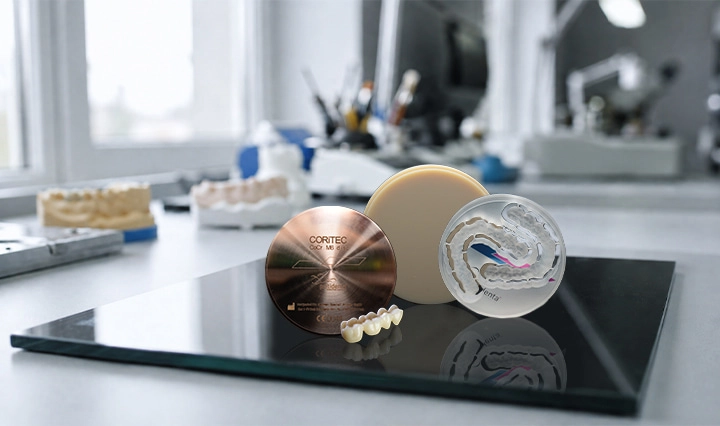
Digital manufacturing has fundamentally transformed dental technology over the past ten years. CAD/CAM milling machines not only enable greater precision but also more efficient processes and a wider range of indications. A central factor is the choice of material, as it significantly determines the stability, aesthetics, long-term durability, and biocompatibility of a restoration. At the same time, material properties such as hardness, density, elasticity, or thermal conductivity influence process parameters and thus the overall productivity of a laboratory or milling center.
The variety of available CAD/CAM materials — from zirconia and lithium disilicate to PMMA, hybrid ceramics, and metallic materials — confronts users with complex decisions. These decisions are shaped by clinical evidence, economic considerations, and technological developments. Modern publications show that material development is more dynamic than ever and that the market is evolving rapidly. Sulaiman (2020) emphasizes that digital materials now represent an entirely new class of dental materials, increasingly optimized for aesthetics and strength.
This article provides a structured overview of common and emerging materials used in digital milling technology. It is aimed primarily at dental laboratories and milling centers seeking to refine their material strategy. The goal is to consider both technological and economic factors and to offer well-founded decision guidance based on current scientific evidence.