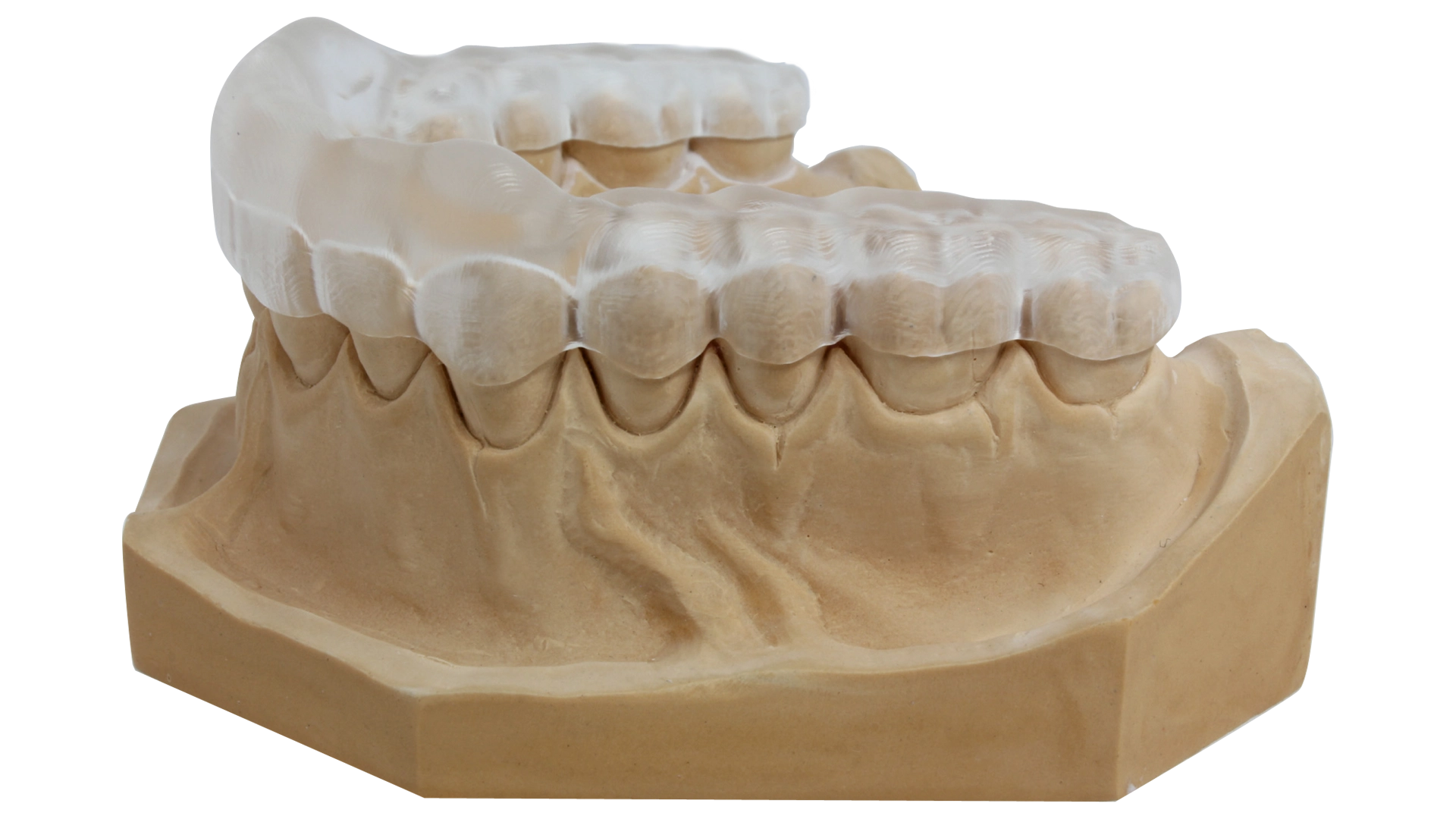
Occlusal splints are widely used in dentistry to protect teeth, manage parafunctional activity and support the treatment of selected temporomandibular disorders. While these appliances have traditionally been manufactured using manual laboratory techniques, digital CAD/CAM workflows provide an increasingly efficient alternative.
Today, patient data can be captured digitally, the splint designed in CAD software and the final appliance milled from an industrially manufactured material blank. This approach provides precise control over geometry, occlusal contacts and material thickness while creating a reproducible digital workflow.
This guide explains the most common types of occlusal splints, suitable materials and how digital milling changes the fabrication process.