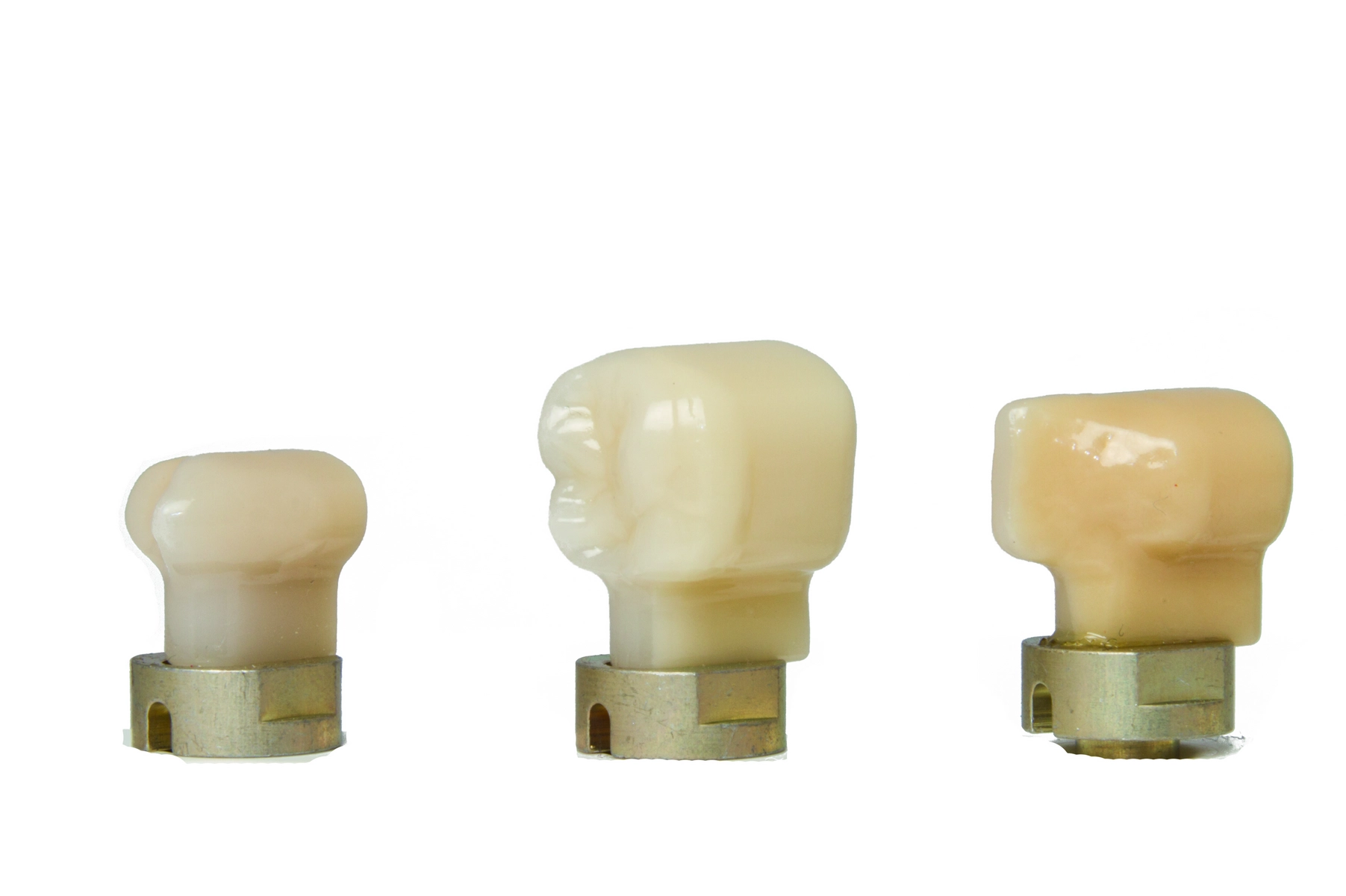
Chairside dentistry describes the digital design and manufacturing of dental restorations directly within the dental practice. A typical workflow combines an intraoral scanner, CAD/CAM software and a compact milling machine.
After tooth preparation, the clinical situation is captured digitally. The restoration is then designed using CAD software and manufactured from a suitable material block. Depending on the material, finishing steps such as polishing, crystallization or sintering follow before the restoration is inserted.
The main difference compared with a conventional laboratory workflow is therefore not necessarily the restoration itself, but where and how quickly it is produced.
In a traditional workflow, the dentist sends an impression or digital scan to a dental laboratory. The laboratory designs and manufactures the restoration before returning it to the practice for a second patient appointment. Chairside CAD/CAM keeps these steps within the practice and can reduce the entire process to a single visit.
This does not mean that chairside manufacturing replaces the dental laboratory. Complex restorations, extensive implant cases and highly individualized prosthetics continue to benefit from laboratory expertise. Instead, chairside dentistry provides an additional workflow for suitable indications.

Chairside CAD/CAM is particularly suitable for smaller restorations that can be efficiently designed, milled and finished within one appointment.
Common indications include single crowns, inlays, onlays, veneers and temporary restorations. Depending on the milling system and validated workflow, different materials can be selected according to the clinical requirements.
Lithium disilicate is widely used for aesthetic restorations such as crowns, veneers, inlays and onlays. Zirconia offers higher mechanical strength and can be used for restorations with greater functional demands when an appropriate fast-sintering workflow is available. Composite and hybrid materials can offer particularly efficient processing because some materials can be polished and inserted directly after milling. PMMA is commonly used for temporary restorations.
The appropriate combination of indication, material and post-processing method ultimately determines whether a restoration can realistically be completed within a same-day workflow.
A digital chairside workflow connects four main stages:
Scan → Design → Mill → Insert
After preparation, the dentist first captures the clinical situation with an intraoral scanner. The prepared tooth, adjacent teeth, antagonist and bite are recorded digitally. Depending on the case and scanning system, this usually takes around 5–10 minutes.
The scan data is then transferred to the CAD environment. With icam, the restoration can be designed digitally, including margins, proximal contacts and occlusion. A straightforward single-unit restoration can typically be prepared for manufacturing within approximately 10–15 minutes, depending on the case and user experience.
Once the design has been approved, the manufacturing data is transferred to the coritec ONE. The restoration is milled or ground from the selected material block. Processing time depends on the indication, material and selected machining strategy, but for suitable single restorations the manufacturing stage can often be completed within approximately 10–30 minutes.
The final step depends strongly on the material. Some restorations only require finishing and polishing, while ceramics may require crystallization, sintering, staining or glazing. After the final fit, contacts and occlusion have been checked, the restoration can be inserted.
For suitable indications, the complete process can therefore make same-day treatment within a single appointment possible.
The CORiTEC one is designed specifically for digital chairside manufacturing. Its compact footprint allows the milling system to be integrated into dental practices while providing the flexibility required for a broad range of restorative indications.
As a 5-axis CAD/CAM system, the coritec ONE can process different block materials and geometries. Depending on the validated workflow, applications range from crowns, inlays and onlays to veneers and other single-tooth restorations.
Wet and dry processing capabilities allow different material classes to be integrated into the chairside workflow. These include zirconia, glass ceramics such as lithium disilicate, composite materials and PMMA.
The main advantage is not simply the milling machine itself, but its integration into a complete digital process. Combining digital scanning, iCAM and the CORiTEC one enables practices to establish an in-house workflow in which the individual production steps are closely connected.
This can reduce external production and transportation steps while giving the practice greater control over treatment timing.

Chairside manufacturing and laboratory production address different requirements. The right choice therefore depends on the indication rather than on one workflow being generally superior to the other.
Factor | Chairside Workflow | Laboratory Workflow |
|---|---|---|
| Typical restorations | Crowns, inlays, onlays, veneers, provisionals | From single units to complex bridges, implants and full-arch cases |
| Turnaround | Potentially same day | Usually multiple days |
| Patient appointments | Often one | Usually two or more |
| Cost structure | Higher initial investment, in-house production | External laboratory cost per case |
| Individualization | Good for suitable single restorations | Excellent, especially for complex aesthetic cases |
| Production flexibility | Focused on chairside indications | Very broad |
For a practice with a high number of single-unit restorations, chairside production can offer significant workflow advantages. Cases requiring extensive individualization, complex implant planning or sophisticated laboratory procedures may still be more efficiently produced in a dental laboratory.
In many cases, the most effective approach is therefore a combination of both workflows: standardized restorations are produced chairside, while more complex cases remain with the laboratory.
ROI: when does chairside milling pay off?
The economic value of chairside milling depends primarily on case volume. Purchasing a milling system creates an initial investment, but at the same time it can reduce external laboratory costs for restorations that are manufactured in-house.
A simplified example illustrates the principle.
Assume a practice invests €50,000 in a complete chairside manufacturing setup and can reduce its external production costs by an average of €150 per suitable restoration after accounting for its own material and production costs.
At 25 chairside restorations per month, the theoretical saving would be:
25 restorations × €150 = €3,750 per month
Based purely on these simplified assumptions, the initial €50,000 investment would be offset after approximately:
€50,000 ÷ €3,750 = 13.3 months
This calculation is intentionally simplified. Actual ROI depends on the purchase price, financing, materials, tools, maintenance, staff time, utilization and the laboratory costs previously incurred. Additional economic effects, such as reducing second appointments or increasing treatment capacity, may also influence the business case.
The key factor is therefore utilization. A chairside system used only occasionally will take considerably longer to amortize than one integrated into a regular restorative workflow.
Chairside dentistry combines digital impressions, CAD design and in-house manufacturing to make same-day restorations possible for selected indications. Crowns, inlays, onlays, veneers and temporary restorations can move from scan to final restoration within a single digital workflow.
With icam and the coritec ONE, practices can establish an integrated CAD/CAM process that provides greater control over production and reduces turnaround times. Chairside manufacturing does not replace the dental laboratory, but complements it by providing an efficient alternative for suitable cases.
Whether the investment makes sense ultimately depends on indication mix, case volume and workflow strategy. For practices producing a consistent number of suitable restorations, chairside CAD/CAM can offer both clinical and economic advantages.
FAQ
How long does a chairside crown take?
For suitable cases, a chairside crown can be scanned, designed, manufactured, finished and inserted within a single appointment. The total time depends particularly on the restoration, material and required post-processing.
Which restorations can be produced chairside?
Typical indications include single crowns, inlays, onlays, veneers and temporary restorations. The exact range depends on the CAD/CAM system, material and validated workflow.
Which materials can be milled with the coritec ONE?
Depending on the validated application, the coritec ONE can process materials including zirconia, glass ceramics, composites and PMMA. Material-specific processing and post-processing requirements must always be considered.
Does chairside dentistry replace the dental laboratory?
No. Chairside workflows are particularly efficient for suitable single restorations, while dental laboratories remain essential for complex prosthetic, implant and highly individualized cases.
When does a chairside milling machine pay off?
The return on investment depends mainly on the number of restorations produced in-house, the investment and operating costs, and the laboratory costs that can be avoided. Higher and consistent utilization generally results in a shorter amortization period.